Fruit Tree Sale & Mystrees!

Last of the Apple Trees

Trees

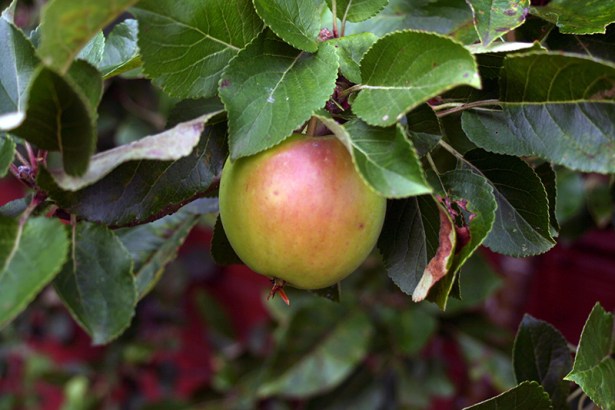
We have quite a few apple trees left (no plums, and pears in single figures, and there’s one peach). Some apple varieties we have left are now pretty small (about 1m), so, to avoid potting them all up, we are now offering them on a first-come, first-served basis, for £10 each bare-root and collected from the nursery.

(Sorry, it’s too late to post them as they are on the point of root and shoot growth). You’ll get to pick out your trees, and they do of course have good roots and will come away very fast. There are still some full sized ones, especially cookers, to choose from as well, at £14.50. Find out how we grow our trees and what makes them special (and way better than what a garden centre offers!).

There are also the usual “Mystrees” – the ones whose labels have gone AWOL! It’s a mystery to us where these labels go – high winds can take the blame I guess. If you like surprises, you can nab one for £10! And whatever we do pot up will be available from summer at £16.

If you want to come visit us this week or next and grab a bargain, phone us on 07749987213 or email@plantsandapples.co.uk. All must go!

Want to keep in touch with us? Join our mailing list for updates & special offers.

Grafting – A Manual – my New Book

Books: The Manual of Plant Grafting By Peter T. Macdonald

ISBN 978-1-60469-463-5 Timber Press, London, Portland.


This is great addition to my library of practical horticultural books – no it is not a coffee table glossy, but 228 pages of really good advice on why, how and when to carry out grafting.

The author, Peter Macdonald, has travelled widely in his research for this book, and brought together 9 chapters covering the history of grafting, the biology of plant union processes, as well the more practical ways of carrying out grafting.

He has been able to cover both old techniques and current thinking and practises, as well as ideas where horticulturalists may go in the future. The photos used throughout are excellent, the diagrams well drawn.

As a producer of fruit trees I find almost every aspect of my operation is covered here, bar a few peculiarities which each propagator has. The relative benefits of different techniques are well recorded so no lack of information here for the aspiring student or amateur.

Of particular relevance to me is the techniques used in fruit production: whip and tongue and chip budding. On page 131 the whip graft is rightly recommended for new grafters, and a good starting point once competence with the knife is achieved. Whilst there is no substitute for seeing the techniques mentioned being carried out, on pages 133 to 136, Peter’s lengthy description, photos and diagrams of the whip and tongue are a great asset. The danger to fingers and hands is obvious in the top drawing on page 135….do get this demonstrated before you try it is my advice!

On Chip Budding, it is stated that the tapes need to be removed in 6 weeks after budding( page 153). In Scotland, I have found that no detriment occurs to the percentage bud-take even if they are left till late winter, and it fits into my work schedule to do this task later in the year.

The Appendix, ( appendices?), pages 179-203 are a very useful resource in a tabular form listing the methods of grafting for over 220 scion  / rootstock combinations plus top worked combinations and a list of current fruit tree rootstocks.

The 4 pages of references and 14 pages of index just finish off this book nicely.

The Grafter’s Handbook by RJ Garner has been the trusted grafter’s bible for 50 years, now this is a very well produced and edited additional resource for the keen horticultural students and amateurs of the future wanting to know more of the subject. I thoroughly recommend this book to these students!


Andrew Lear

2015.

Cider Apples

Whiteways Cider factory was about 5 miles from my home in Devon and we used to scrump rather horrible apples from their orchards as kids….probably Langworthy, and Dunkerswell Late among many others. And as a teenager of course I drunk some pretty rough ciders from big round barrels! As there is a great buzz in Scotland surrounding cider making and cider apples this year I thought I’d post a few thoughts on the subject. We have in the past grown Morgan’s Sweet, Tom Putt and Fair Maid of Taunton….and I have really enjoyed browsing through Liz Copas’s ”A Somerset Pomona” over the Xmas break. In this book there are some varieties reminiscent of my childhood climbing and scrumping trees! Cider apples come in different categories according to their taste….so don’t worry about what they look like in the books as it is the cider making qualities that are important here. In a nutshell they are categorised as Sharp, Bittersharp, Bittersweet and Sweet, and may be early mid or late ripening. At our cider sessions last year it was possible to catch these elements in different Scottish apples; getting a mix of these flavours is how to make a good cider.  Going for say a sweet and bittersharp mix would be good. Or you could make different single variety ciders and then blend before drinking. A bittersweet and sharp mix would in my mind do the same. The tannin content (the browning) of an apple is useful and the specific gravity content of the juice is important to cider making, giving you the necessary ingredients for alcohol production! Of equal importance to us here are the productive qualities of cider varieties, as there is no point in planting a cider tree that just isn’t going to produce anything under Scottish conditions; many won’t even ripen properly, and are just too late for our climate.  So, over the following year I will be propagating a small range of specially selected scab resistant, early, and precocious trees, ready for sale in winter 2015. A small amount of scab is acceptable for juicing, but not so much that the trees and production suffer. There are a few examples of cider trees in Scotland that I know of, and most are large and relatively unproductive. Growing central leader trees on a semi-vigorous stock is probably the way forward for us. Don’t be fooled by the unpruned large Herefordshire trees as a system, it would not suit us all here, unless you have a large acreage to play with. Our likely mix of sharps and bittersweets, sweets and bittersharps will be among the following: Langworthy, Porter’s perfection, Stoke Red, White Jersey, Brown’s and Slack Ma Girdle and  others.  Traditionally cider apples are grown as very big trees and they are shaken free of all their fruit. OK if you can wait 5 years for a crop, but most of our customers want to be making juice sooner. So we will be grafting some mm106 semi-dwarfing trees as well as vigorous M25 trees for sale in a year’s time. 79 Watch this space! And best wishes to all you apple tree growers for the new year…. and remember to Wassail your trees on January 17th!

James Grieve

James Grieve

James Grieve

Eater. Raised by James Grieve from  a seed of Pott’s Seedling. Introduced by Dickson’s Nursery, Edinburgh in c1910, where Grieve was manager.

Heavy cropping, (I get 150 fruits every year), it’s ‘sweet/sharp’ and juicy; not  a keeper, unless you can pick very good specimens. Very reliable and precocious variety, but a relatively short lived tree. We also sell a red form for our occasional poor summers. It is highly praised as a cross in many hybridising programmes (e.g. Katy). I disagree that it’s a cooker as well.

More information
Place an order

James Grieve