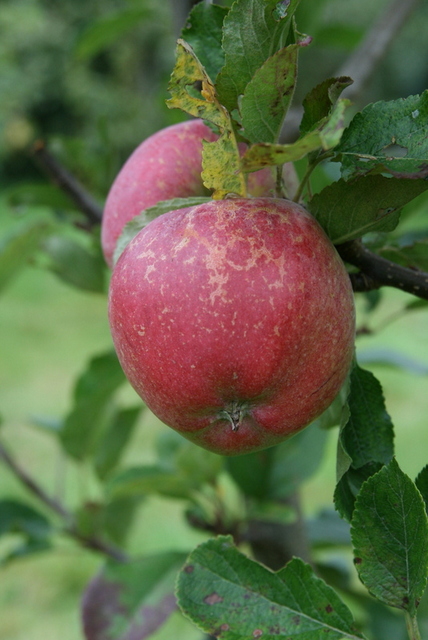
A very nice Carse of Gowrie eating apple, sweet, tasty and ready mid -season.


A very nice Carse of Gowrie eating apple, sweet, tasty and ready mid -season.

What a strange apple this is. It is distinct in the nursery with it’s long silvery leaves. Produced and named by David Storrie, a nurseryman in The Carse of Gowrie, Perthshire. Crisp small bright apples are early and soon go over, so definitely to be eaten quickly. Rosebery was Prime Minster by the way!
This is a Keswick cross, so has good genes. It is an early cooker, can be small unless thinned, but is very hardy and productive, a character of all the codlins. I came across a row of these near the motorway near Falkirk, they were very old and neglected, but still form a really productive and healthy hedgerow! It cooks to a nice fluff, or is a crisp eater.

This apple was developed from a Cox x Delicious cross in New Zealand, and i was tempted to propagate it after tasting it in Dunkeld Orchard a few years ago. It has a very fine and unique flavour.
. 
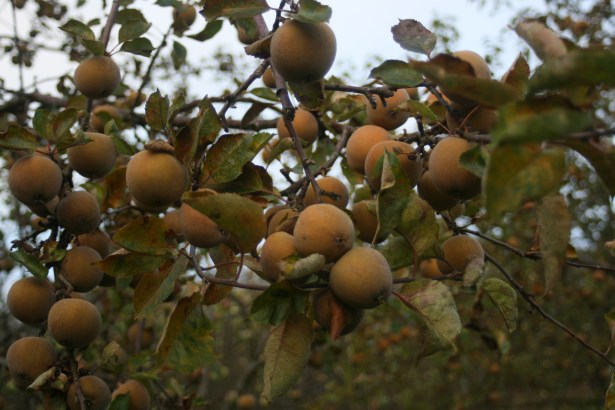
A very nice russet eater probably 200 years old or more. Cinnamon colour, ripening in January. A good keeper. Old trees have been seen in the Clyde Valley with fruit hanging on well into the New Year.
Last year I reported on a trip to the Jerte Valley in Extradamura where I saw many Cherry trees. And in fact upon my return i found them for sale at a farm shop in Angus! Last month ( March) I was again in Spain and visited both Madrid and Cordoba Botanic Gardens. Both had collections of herbs and fruit trees, but Cordoba also had splendid indoor displays of Olive, Vine and other traditional crops used for making baskets. However my best experience was seeing the extent of Olive growing in the south of Spain as I literally cycled through 200km of Olive Orchards! I am beginning to get the impression that Spain does its horticulture at a big scale. If ever there were a disease to hit these trees, then the economy of the region would collapse overnight.
The last of the trees along the Via Verde del Aceite were being harvested as i cycled by in early March; I scrumped a few, and was surprised to find them bitter and producing a red stain on my fingers. So much for olive green!
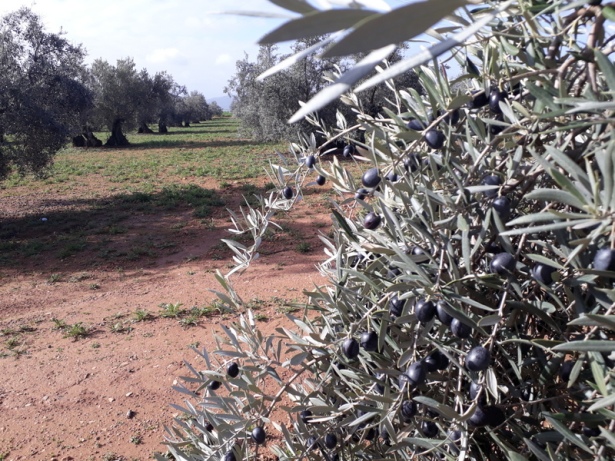
Apparently ( according to wiki) they all need to be partially fermented to make them palatable. I saw men using sticks and a Stihl machine with a long vibrating pole to shake off the last fruits, which were then raked up by hand.
Surprisingly few varieties are grown commercially, and the dozen or so countries growing them tend to have their own favourite varieties. It is a growing industry, olives as we know being associated with healthy diets. Spain is by far the biggest producer, followed by Italy, Greece, Turkey and Morocco, with US and China all getting in on the act it seems.
It is suggested that they are not self-fertile, so a mix of varieties is necessary. I couldn’t discern a mix of trees myself, but there were orchards with a slightly greener leaf colour. The pollen can cause considerable irritation and it is windblown to boot. Glad I don’t live next door to an Olive Farm!
My biggest concern was the fact that there was no ground flora beneath these orchards, or very rarely a patch of yellow flowers, and as a consequence the heavy rains have caused a considerable amount of erosion on the hillsides. The area I travelled through was predominantly limestone and I would have expect to see a good number of flowers.
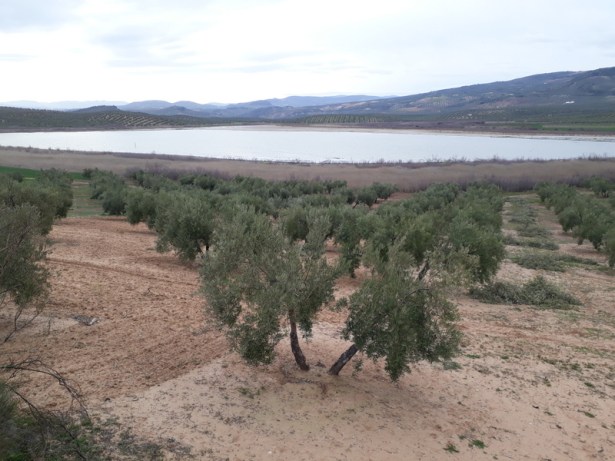
Pruning was being carried out in many orchards, and seems to be quite brutal with big limbs being cut out of the middle of the trees with chainsaws. Presumably this is to let light in, and to facilitate easier harvesting with many horizontal branches. The spacing between the trees was very wide, well over 8m. Only later from the train window did I see some intensive orchards, with trees planted very close together in lines 3m apart or so. These were quite possibly pruned with hedgetrimmers. I wonder what the productivity is of these trees compared to the more extensive systems? Unfortunately i couldn’t find anyone to ask.
However i’m now back home and enjoying some big Olives Margaret bought at the Deli in Dunkeld. Alas I don’t know where they came from but I will be taking more interest as to where they originated and the variety in future!
Andrew March 2018.

What an amazing harvest this year, ‘bushelfuls’ of apples and some very big ripe pears too! Our apple masher and press has been put to very good use, the record probably achieved at a busy Blairgowrie Market with over 350 litres of juice produced. Many people are noticing that a mix of cookers and eaters makes the best juice, the extra acidity giving it a wow factor.
The William’s pear tree opposite the cross roads at Caputh was hanging with beautiful ripe yellow pears just last week. Glad to see someone has picked them now. And many a pear on a south facing wall have done well this year.
However, our heritage pears in Scotland can often be like little bullets for weeks, then suddenly go soft in the middle! Very different to shop bought pears. You need to keep testing them and get them on the right day.
The warm weather in May really got our fruit expanding well, my James Grieves and many others being a good size and colour this year. Despite the wet weather in August, scab lesions have been relatively low this year.
Here at Middlebank we have hardly been able to keep up with the falling fruit….and many have rolled down the hill to the delight of our neighbours! There are disadvantages to planting trees on a hill! Also our Worcester Pearmain has been underplanted with various perenials and roses, all making collecting windfalls impossible. So the lesson is, plant your trees in your lawn ideally!
Budding percentages were very high last August, resulting in a very good crop of trees for sale this winter. And they have continued to grow in the warm summer, so feel free to come and inspect before ordering, though some popular varieties are now almost sold out.
Foraging ( and scrumping) has been very rewarding this season too, ranging from Seaweeds from Saltcoats, Mirabelles from Murthly and Birch Boletes from Birnam….. but note we only take a few for our own use. We saw a forager waltz off to a local chef with what he thought was a basket of Chanterelles in Dunkeld, and no protest from Margaret could dissuade him otherwise of his catch! Beware a little bit of knowledge can be dangerous! We have avoided the local hotels as a consequence!
My favourite little Crab Apple high up on Birnam Hill was fabulous in flower, but alas produced a poor crop of crabs. I have saved a few from the voles, and intend to sow them for replanting somewhere wild in a few years!
Happy foraging and harvesting all!
On my travels in Spain in April I came across an amazing horticultural enterprise on the border between Castille y Leon and Extremadura.
I took a bus from Avila at !200m elevation, down to Plasencia at 400m, which takes you off the high plains and winds down between the heights of the Gredos Mountains. And it is here that my eyes were astounded by the numbers of flowering cherry trees that line the valley for the next 40 km! Lots of terraces well up the mountainside allow cherry planting almost to the summits on either side! Hundreds of thousands of trees! One website suggests there are 10,000 ha. and as many as 4,000 growers. The orchards spread east and west on terraced land.
Further investigation took me back up the valley to a Cherry Museum where I learnt that these trees are part of one big co-operative and make their way into a variety of products. I was very lucky to catch the end of the flowering season, the hot weather shortening this somewhat this year.
So i wonder, has anyone come across Jerte Valley cherries in this country? The variety grown is the Picota though judging by some late flowers, a few others are planted too. The co-op supplies Lidl so look out for the fruits later in the year. One of the production sheds processes 40,000kg per day!
This is horticulture on an industrial scale! Maybe we can learn something here relevant to Scotland? I am passionate about the loss of horticulture in the Glens of Scotland, a result of hundreds of years of depopulation, yet here in rural Spain it has survived and thrived despite a similar history of emigration to the Spanish colonies.
I often get cars stopping at the field to ask what I am growing in one of the Perthshire Glens and always get a surprised look when I say it is apple trees! Just imagine if it was a whole valley of apple trees from Pitlochry and Aberfeldy to Perth!
See: http://cerezadeljerte.org/en/jerte-valley/ for more information….you can even spend a few days picking fruit with the farmers if you want! A great place to see the real Spain, with many mountain biking and hiking trails too. And the Albergue Santa Anna in Plasencia is one of the nicest hostels I have ever stayed in!
Andrew, 2017
Sorry to anyone trying to get hold of us on 07749987213, my phone has been out of action for a week. Use 01738787278 in the meantime please!
 plantsandapples.com