Beauty of Moray
Scottish Variety
A lovely bright green cooker from the North East, its a very pretty and hardy Scottish variety. Lovely in flower and ready in September.


Scottish Variety
A lovely bright green cooker from the North East, its a very pretty and hardy Scottish variety. Lovely in flower and ready in September.
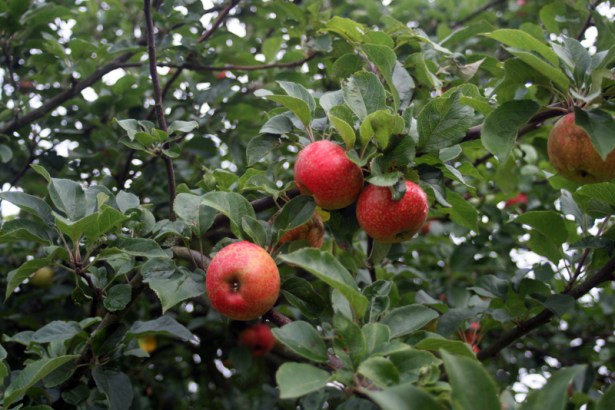
Eater. Introduced by G. Coolings from Bailbrook near Bath in 1864. Awarded first class certificate by RHS in 1887. Very early small red-streaked apple. Formerly grown widely commercially and in private gardens. Go ‘en vacances’ and you will miss it! Once popular in Scotland, pick and eat off the tree. See also Exeter Cross.

Eater. Raised c1700 by Dr Ashmead, Gloucester. Widely planted in nineteenth century. Intense flavour and well esteemed. A good russety fruit for the east of Scotland especially.

A slightly pink flushed large cooking apple that has a reputation for being very hardy here. Well worth growing if you are above 400ft elevation or in the north or west. Fabulous blossom!

A favourite of mine. Makes a delicious eater in Scotland. It’s not a true russet here, but tends to be nicely flushed red with a touch of russet. Good productive tree at Elcho Castle. Irish origin.
Hot on the heels of my last coffee blog I continue the theme here after visiting the Woodhouse Coffee shop near Kippen (on appletree business of course!).
Its very accessible from Stirling, and on a roundabout also so easy access to the large car park.
The shop was loaded with interesting goodies including many organic items, the largest pie I have ever seen from the Kippen Butcher section, teas of exotic nature, and a fine selection of interesting beers and ales. Also a few ciders from Cornwall with weird colours, a must try for the future!
Slightly puzzled at the lack of vegetables in a farm shop, though there was a ‘naughty’ sweety section….what nae spuds?
Its fab to sit on a comfy cushion in a cafe, and recycled ones too, and I love all the wooden tables, boxes and baskets etc. Solar panels on the roof also….You get a ‘hello’ as you enter and there were plenty of staff serving on a Monday afternoon.
But best of all was the list of teas you can buy! And I ordered a good latte before I read down the list. Mistake, as a ‘Gunpowder’ would have been just the ticket or a chai! Lunch of Fennel and lemon soup will also wait for my next visit.
On the way out – oops a ‘Grapevine’ pale ale for a pick me up later tonight….it comes recommended from a local microbrewery. You do know about the old Kippen grapes, the world record holder? No, maybe the owners should put a photo on the wall? You’d be impressed. So cycle out a few miles from Stirling or pop in en route to the west and enjoy a cuppa!

Intensive Apple Orchard at Craigie Farm
I love the fact that you can enjoy a cup of good coffee, buy a delicious local artisan oatcake or black pudding, and pick a few fruits for your pudding in one short trip. These are things you cannot do in style in the crowds and hassle of a supermarket.
My most recent trip was to Craigie Farm Shop near Kirkliston, a pyo farm, much of which was open to the public.On a Sunday afternoon it was very busy, but there are lots of seating in and outside the cafe, and I like the idea of the canine cafe! However poor Jed was banned from the fruit growing areas, the impressive polytunnels with table tops groaning with strawberries and pots of raspberries.
After viewing the grunting pigs, and the friendly Shelties, we followed the nature trail along the lines of open grown heavily laden gooseberries, and surprise surprise came upon a fabulous modern orchard. (There’s always an ulterior motive with Appletreeman! )
I have seen this square block of trees developing over the last year from the dual carriageway into Edinburgh, and was determined to check it out. It is as I thought, a very exciting new development in top fruit growing in Scotland. There are about 15 lines of very closely spaced trees, at one meter, on very dwarfing stocks of M9. It all looks very well managed, and very productive with sunset, worcesters, katy etc. all yielding fruit in this rather mixed year.
Very good to see that lines of Italian Alder have been planted as shelter belts also, a necessity for this easterly plot way down the bank, whereas some cherries further up near the cafe seem to be more exposed. Back at the shop we picked up a few punnets of fabulous rasps and gooseberries and set off home very pleased!
The farm is not organic, but allows the public to see into the tunnels so common in Perthshire, with real commercial horticulture in action, weeds and all! We will certainly be back, hopefully at a less busy time to speak to the ‘patron’ and of course for the harvest of apples!
The Control of Apple and Pear scab by Sulphur Sprays
My James Grieve has for the past 3 years suffered some scab on the leaves. This wouldn’t be a problem, except for the fact that it can severely mark the fruit in due course and in wet seasons. By resorting to a regular spray of sulphur, I have managed to prevent it reaching and marking the fruit. Sulphur is a basic chemical, so relatively harmless to the environment. The weather conditions earlier this year in the east were very favourable for scab spores, but luckily this last week’s dryer conditions has improved the situation tremendously. In the west of Scotland it is a problem most years. Powdery mildew has also been prevalent on many apples this year also and sulphur will reduce this also. It attacks the new young leaves and slows down the growth of trees for many months.
I use 5.6 mls in 10 litres of litres water and spray the leaves every 10 to 14 days if I can. I start at the ‘pink bud’ stage and continue until the end of extension growth, around about mid- July. It is essential to achieve good coverage of all parts of the tree, especially the growing points – they will have the appearance of a smattering of snow after spraying!
Certain varieties of fruit trees and bushes may be damaged by sulphur sprays. In the old books they called this ‘sulphur shyness’. The following are reportedly susceptible to leaf damage: Beauty of Bath, Belle de Boskoop, Cox’s Orange Pippin, Lane’s Prince Albert, Lord Derby, Newton Wonder, Rival, Stirling Castle, and Doyenne du Comice.
My Hawthornden seems a touch damaged, and possibly my George Cave, but since the first few applications, I have restricted my sprays to Worcester Pearmain and James Grieve only, the only two in my garden showing any significant scab symptoms.The Boskoop seems to be ok in my garden, and none of the pears show any damage.
I have seen scab on Scrumptious this week, and many new so-called resistant varieties usually succomb after a few years in the field unfortunately. Knowing when spores are in the air is how the professional’s are able to time their spraying; we may rely on regular pruning and good open sunny sites as the best prevention!
Hop Production in Scotland
For the beer making fraternity the subject of hops and the merits of its various clones are of great importance. To gardeners, more bent towards ornamental plants, the growing practicalities of this climber under Scottish conditions are of more interest.
What is it? Humulus lupulus is a climber related to cannabis, and has twining stems and tiny little hooks to enable it to grip onto to any upright object it can find. It’s surprising how tough these stems are in mid season, I’m sure John Seymour would have recommended basket weaving with them!
It is a perennial, and would normally die back late in the year and send out new sprouts from a permanent root system every spring. It is a plant with purpose in several ways…the young emerging shoots can be eaten like asparagus. Professionally, four shoots are allowed to twine up from the clump of roots on 4 spaced coir strings to over 6 metres, creating a veritable vertical forest of growth by high summer.
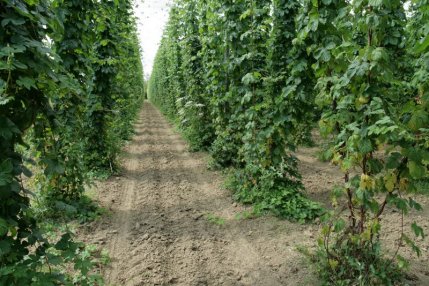
Well cultivated ground between rows of Hops.
I have seen an organic hop farm in Kent, where the plants are grown on a little ‘hillock’ and carefully weeded by rotavator between all the plants. The height and width of a hop wiring structure is a truly impressive structure to see! I have also seen hop farms in Worcestershire, again on very good soil. Overall though, the acreage is a lot smaller in the UK than even decades ago. A good deep fertile soil is ideal, perhaps the Tay Valley is the place for a Scottish Crop? Wye college in Kent developed some dwarf varieties, so the risk of wind damage might be reduced.
In late June, on the female plants, side shoots develop from the main stems and subsequently these produce the flowers which are so prized ornamentally. You don’t want male plants or you will get seeds which are undesirable! Later the flowers form the ‘hops’ and all the stems are cut down to be taken indoors for extraction. The oast houses of Kent were once the drying rooms for the hop industry.
The hop damson aphid can be a big menace, and I’ve seen mildew on the leaves on our plant in wet summers. Apart from that we have few problems and every year our golden-leaved hop scrambles up against a sheltered shed wall and produces little hops for us.
Propagation can be by division of the whole clump of roots, or fertile seeds can be purchased if you want to have a go of growing your own. To get a particular variety of course you would need cuttings or divisions, or layer a shoot across the ground and slightly bury it to encourage rooting. There are some lovely named clones such as White Knight, Fuggles, Goldings; the RHS Plantfinder lists about 14 different sorts (page 365 ).
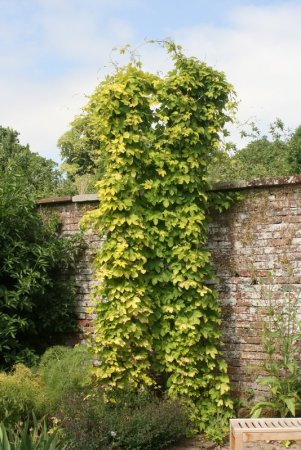
The golden leaved hop, Humulus lupulus ‘Aureus’.
Seed grown plants can be supplied from plantswithpurpose, so what’s stopping you covering that horrible shed?
Ref: The RHS Plant Finder 2004-5, pub. By Dorling Kindersley.
 plantsandapples.com