See food….

or sea food. Went on a student outing on Monday; it was a bit alarming to realise they (the students) were touchingly trusting in tasting anything and everything – had to remind them in the botanic garden that some plants are actually highly poisonous and that if they see me chewing on a leaf it’s because I have well-honed identification skills and a certain amount of knowledge – not just picking random foliage and munching on it! And I make mistakes too – discovered that Good King Henry (Chenopodium bonus-henricus) raw is FOUL, whereas cooked it’s one of my favourites.

Then we went to the beach. There were lots and lots of bivalve molluscs that my small brain had classified as Sand Gapers, commonly if erroneously passed off as native clams. When I came to consult a field guide I realised there are in fact any number of nondescript bivalve molluscs they could have been, and closer examination would be needed for a precise identification. By the time I caught up with the students, Stuart had already filled his pocket and was insistent he’d eaten them before anyway, others were following suit. I gave them all dire warnings and persuaded Stuart to part with some of his haul, which I cooked later by plunging into boiling water and boiling for 8 minutes…… they were just the last word in deliciousness. Must go back a. to get more and b. to stick a Latin name on them!

And more wild garlic…

Ramsons (Allium ursinum) is commonly called Wild Garlic, even though several other wild plants also have this name. It’s the broad-leaved, glossy plant that carpets old woods in April and May, and bears heads of starry white flowers. Both the leaves and the flowers are edible. Last night I made Ramsons pesto with a bucket of leaves.

I just liquidised the washed leaves with the water that clung from washing, together with a packet of pine nuts, a small bag of other undistinguished wild nuts that needed using up, and olive oil. I don’t know how much olive oil went in because I just slurped it in till the consistency was right, but couldn’t have been more than a couple of eggcupsful, maybe less. Then I tasted it, and decided it needed a wee bit of Maldon Sea Salt (this isn’t advertising, just supporting a local industry from way back home, being an Essex Girl). Andrew said it was too bitter and to add some honey, but I didn’t – these days I can’t stand anything to be too sweet and I thought it was perfect. He added some honey on his oatcake but still didn’t like it, so it’s all for me. Excellent! Strange how the garlic flavour comes through really strongly – individual leaves in salad are very mild, but this is good and strong. The colour is absolutely beautiful too.

What else? Lime leaves are nice now, before they start to lose that spring-green flavour. Wood sorrel remains magnificent, and ground elder has reached the point where it’s better steamed/cooked rather than raw. Flowers appear in salads – cornflowers, violets, broom buds, chives and of course ramsons. We were down at the coast in Fife last weekend and failed to collect because we forgot to go back for it lots of the seaweed Enteromorpha intestinalis, which is rather nice. However my stomach rebelled against a rich diet badly enough on Monday, so maybe it was just as well.

More St. George’s Mushrooms made their way to Saturday’s breakfast, and burdock stems onto dinner. I have only so far eaten the fleshy leaf stems of the Great Burdock (Arctium lappa), although I am assured other parts are edible too. It’s delicious. What you have to do is carefully peel away the slightly hairy outer skin on each stem – it doesn’t matter if you don’t get all of it. It’s a bit like peeling rhubarb. You’ll notice the interesting, musty but rather pleasant smell. Cut into sections and steam or lightly boil. You can serve it as a vegetable; I used to add butter but don’t feel the need to these days. My tastes really have changed!

Noticing the buds on elder bushes; the rowans are out and may (hawthorn) about to blur the distinction between late pear and early apple blossom. Eyeing up this year’s wine and cider sources. I racked off last years elderberry and sloe and blackcurrant wines this weekend – the last before bottling. As usual the elderberry tastes the more promising!

Pizza…

Last night I dreamed of pizza again. Specifically a six foot diameter cheese and tomato pizza laid out on the lawn. I had to take my shoes off and walk on it to cut it into six slices. I was worried that everyone would want a slice and there’d be none for me. There was a large cup of tea in the dream, too…..

4 days to go!

OK, I’m now on antibiotics, which seem to have cleared up the cystitus, but the doctor didn’t think my surfeits of spinach and rhubarb were major culprits, neither does my herbalist friend Helga, so I am carrying on to the bitter end. I was never going to give up anyway, was I? However, Helga bids me stop eating comfrey as it contains chemicals that can damage the liver….. I’ve eaten rather a lot of it over the years and it’s recommended in several places, but looks like it might be one to be cautious about.

Anyway, I should manage without for the rest of Lent, because my friend Janet rescued me today from the tedium of four more days of potatoes, carrots and chicken (whether stir-fried, stewed, souped or raw, trust me, it gets tedious). She has a neighbour who loves fishing but doesn’t like fish and so gives away any catch – last weekend he had a successful trip and there was trout to spare! So we met up today in Glasgow Botanic Gardens and ate a picnic of delicious trout and weed/rocket salad in the Kibble Palace. We sat by a large flourishing plant of Caprobotus edulis, the Hottentot Fig, with its succulent edible leaves looking very tempting. But I was very good and the plant is intact. I do have it in the nursery anyway if I need some – but theirs was glossier and fatter! Brought home a large trout for the rest of the week and a big bag of kale, pak choi and celery from Janet’s polytunnel. I am really on the dregs of the carrots and tatties now; they are taking longer and longer to prepare enough decent bits, so fresh greens are a great help. I swapped them for some plants – Tree Spinach and Tree Cabbage.

I am now completely out of apples, and hazelnuts – no more snacks.

Now I’m getting to the end of the challenge I am thinking where I go from here. It has not been impossible to survive the fast, but where would I have been without Ian’s potatoes and apples, James’s pheasants and carrots, Andrew’s onions and Janet’s contribution today? Clearly I am far from self-sufficient on my own! though its true to say had I planned it, I would have had more of the right stores. It’s also clear that within a community a good deal of potential exists for self-sufficiency if we can learn to share or trade. More and more I am convinced by the need to develop community thinking in food provision. And it is a way of thinking that seems to be catching like wildfire.

I am struck that it isn’t the lack of food that has made this hard, but the lack of choices. I realise that in former times, this dietary monotony was the norm for common people – and how much more feast days and celebrations must have meant to people. They really knew a treat when they got one, and doubtless appreciated it. I have remembered how to appreciate treats, good food, special things, myself; and I don’t want to lose that appreciation by going back to “having anything I want any time I want” from the glittering displays in supermarkets. I know throughout the world there are many millions of people who NEVER have food choices, and I have realised a bit what it must mean to live like that, often in real hunger, not the slightly panicky peckishness I’ve had to put up with from time to time.

I know I will never take food, and the choice of food, for granted again.

Losing It.

This week I’ve been increasingly bored with what I’m eating, and failing to do much about it. High point was James next door discovering a row of parsnips he’d forgotten about and didn’t want; lovely roasted with pheasant on Sunday, but then it was on to another week of variants on stew which all tasted the same. On Thursday I even forgot to take the food flask to work, so went from 7am to 6pm on a boiled egg and some REALLY boring yarrow tea. My students offered me various Pot Noodles and Crisp Rolls but I resisted; even the cake, with which one student insisted on rewarding me  in shock at passing an assessment, I passed on to a colleague whose birthday it was. By the time I crawled home, I considered myself crazy to be doing this.

And then I ate a baked potato and a poached egg and was full, and couldn’t be bothered to eat or prepare anything else. Not surprisingly, I am losing weight. I need a belt to keep my trousers up. What’s helping me lose weight? Not avoiding carbohydrate (as a one-time (briefly) Atkins diet veteran, I couldn’t go through that again). I am eating less carbohydrate – and what I am eating is mostly the starchy kind. But then I’m eating less of everything. No dairy produce – apart from the small quantity of home made cheese I’ve now discarded (partly suspicion it didn’t smell so good, partly because I dropped it in the washing up water).

Anyway – crossly I chopped up skinny leeks and bits of vegetables and herbs, pushing aside  packets of biscuits left out to annoy me and odd bunches of dried chillies…… hang on. How could I have forgotten? I GREW THOSE CHILLIES – AND DRIED THEM IN 2007! So I could use them! Why hadn’t I thought of that before? Chopped and chucked one into the stew – would it still have any power? It did! Oh joy, a change in flavours….. and I had the first of my forced rhubarb for pudding; so tender and sweet I had only to add a touch of redcurrant jelly to make it palateable.

Sweeteners – honey and sycamore syrup – are getting low, it’s a good thing I am getting used to sharper tastes. Wild greens are forming a larger part of my diet. Orpine (Sedum telephium), a native succulent with fleshy, crunchy leaves, is available, nice in salads and I’ve added it to stew as well. Nettles are appearing, and I’ve seen the first Bistort coming up, so will try a variant on Dock Pudding soon. Comfrey and ground elder remain mainstays – going in everything. Wild garlic and Welsh Onions and Three-cornered leeks are lined up to replace garden leeks of which I have only 4 left. No hardship in wild greens – they have always been one of my favourite foods. I like their strong, pronounced flavours and the freshness after months of root veg.

I also noticed Meadowsweet (Filipendula ulmaria) coming up – a beautiful white flowered native found in dampt meadows andboggy ground. It contains salicylic acid, and aspirin was first synthesised from it. I made some meadowsweet tea forthwith, it is a quite distinct flavour, can cure a headache (not that I had one) and as welcome a change drinks wise as peppermint was last week.. I am now past the half-way point to Easter Sunday, a challenge coming up next week when I go off to Ullapool for a 3 day student trip, if I get through that I’ll be on the downhill stretch.

Food or First Aid? March 6th

A couple of uneventful days up till now. My wild salads consist of: ground elder, miners lettuce, rocket, hairy bittercress (not too bitter this time of year), fennel leaves from the greenhouse, lemon balm from a pot I have put above a radiator to produce rapid leaf growth, and Brooklime (Veronica beccabunga), an aquatic weed I have growing in a small pondlet which makes good watercress. A couple more days and shoots of Orpine (Sedum telephium) will be added. As there’s not much green, I have added chopped apple and beetroot – but down to my last half beetroot unfortunately.

Actually a bit worried about running out of stored and frozen veg before Easter. I remembered today (in the course of chasing the ducks off them) that I have some celeriac in the ground still- pretty minute but packs a lot of flavour. Spotted comfrey coming up today which is a great relief as it produces lots of leaf and is quite filling, but unless we get a week or so of warm sunny weather it won’t grow very quickly. Yesterday it snowed again, and the frosts are fearfully hard just now.

This morning I put some of my curd cheese in my omelette; thanks to the garlic and herbs it was most tasty (not exactly gourmet cheese mind). Hens churning out eggs well, ducks and goose show no signs of activity. They should remember I quite like roast duck. Anyway, whilst peeling celeriac for yet another stew (this one I nearly burnt and rescued by chucking in some fish stock I had in the freezer – tasted good!), I peeled deeply into the top of my thumb. It was excruciating and bled copiously. With a big pile of washing up to do and food to both find and prepare, it had to be stopped and from past experience I know the remedy. Yarrow.

Out to the nursery to see if any had come up yet – yes, it had! Then I remembered that yarrow tea is pretty acceptable compared with rosemary and wild strawberry – do I save it for tea, or stop the bleeding? (never mind the customers, their time will come). I chose healing. Made a poultice  by grinding the yarrow, applied it to the cut  and bound it with cotton wool and tape. Then donned a disposable glove to get everything done.

As is the way with yarrow, the pain stopped almost immediately, though the blood soaked the cotton wool. When I changed the dressing an hour later, the cut had very nearly sealed over.  It should by rights be throbbing, but hey, this is one old hippy remedy that WORKS. It’ll be fine tomorrow!

March 1st

Severely put to the test last night. Friends of mine had a joint birthday party, with food. Johanna offered to cook for me one of the mackerel we had caught together in the Firth of Tay last summer, with veggies from their garden, and the event was to kick off at 7pm. That sounded great and didn’t break any rules! So I didn’t eat too much all day – just one of the potatoes I dug from James next door’s garden in return for the digging, for lunch about 1.30pm.

What I didn’t realise was that dinner was preceded by two hours of the most succulent and delicious-looking “canapes”  – which of course I couldn’t eat! I sipped at the home made elderflower wine I’d brought and realised I was getting light headed, and my stomach was making funny noises, so I went back to water. All the while this table full of food beside me…. anyway, I perked up considerably after wolfing down my mackerel, cauliflower and peas – and Johanna insisted on donating me the other 2 mackerel fillets they had defrosted, so I had one for breakfast. Had to disappear to the loo when the birthday cakes and the After Eights came out – more than the heart could bear.

Mercifully the hens have decided to start laying again, so I shall have some hard-boiled eggs to add to the slowly drying apple rings as snacks. I think I will just use the hazelnuts as snacks, too, rather than try to make them into a meal. Rose wanted rid of another cockerel yesterday who was brutalising her bantams, so I think I have no problem really with protein, and the hazelnuts are just a treat at times.

I had the cockerel hung up to pluck and draw this morning when I discovered the cupboard under the sink was full of water so was distracted by the need to do some filthy plumbing. By the time I had got that fixed, the cock in the freezer, tonights dinner (pheasant, leeks and a potato) in a slow cooker, and tomorrow’s vegetable stew for the food flask (I work a 12 hour shift on Mondays at the college), not to mention cleaning and drying the kitchen, it was late afternoon. So much for foraging! I’d have loved a pot of tea (how I LOVE tea), but had to settle for a wild strawberry leaf tisane, which is… acceptable.

I have my curd cheese hanging up in muslin to drain; and another pan of sycamore sap on the stove, and the house is tidy but I’ve had no time to relax this weekend. So pretty exhausted tonight, craving chocolate, or a mug of Horlicks, a biscuit…. I think I’d better go to bed.

September and October Catch-up

September passed in a bit of a blur, to begin with – as always the start of this month dominated by the Dundee Flower Show and its pre-math and aftermath, coupled with the start of a new term at the college, which was more complicated than usual!

So what follows is by way of a summary for a month that is actually a good one for foragers usually – just needed a bit more time in our case.

On 10th, I foraged along Crieff Road in Perth for fruits and nuts for purely educational reasons, but noted some excellent elderberries on campus, and some tedious municipal planting yielded a nice bag of Japonica quinces (Chaenomeles japonica). These fragrant fruits (they are pomes to be exact) make a lovely addition to fruit pies and puddings. Blackberries ripe trailing over our back wall from the neighbours – started to harvest and freeze them.
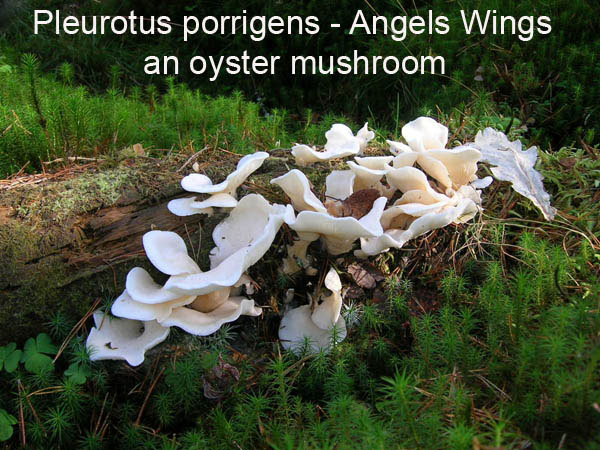
angels20wings20web


On 14th, we went fungi-foraging and netted some Slippery Jacks, one Cep, Bay Boletes and several Angel’s Wings. Angel’s Wings are Pleurotellus porrigens, related to Oyster Mushroom but subject to some doubt in internet circles as a couple of folk in Japan once were ill on them. We’ve eaten them regularly for quite a while, and so have many others, so I am suspicious about the identification in the case in question. Worth bearing in mind, though that people can react differently to individual species, hence the confusion when one book says “edible” and another says “best avoided” or similar ambiguous verbage. The other find on the 14th comes into this category – Plums and Custard (Tricholomopsis rutilans). It’s easy to identify because Plums and Custard perfectly describes the colouring, so is good to eat on that score. Can be slightly bitter, but we eat it anyway. Braised it with shoulder of lamb and cranberries from our garden.


On 19th, it was rowan berries day. Collected a big heap of them and made rowan jelly – delicious. That week, the boletus and chanterelles I dried in July and August were put into jars for winter use, and noted the rose hips were looking good. Shaggy Ink Caps were spotted at the college, but turned to ink before I could pick them. On 26th, we raided one of our usual haunts and found, apart from the usual fungal suspects which we rounded up, a new one – Hydnum (or Sarcodon) imbricatum – a type of Hedgehog Fungus. They were tea-plate sized, scaley fruiting bodies by the edge of the path, quite spectacular. As we had never seen it before we only took one for identification, and I’m glad because they are apparently quite rare, pinewoods in Scotland being the preferred habitat. Edible though – and delicious!

Puffballs were taken with roast beef on 28th, and a dessert of blaeberries, brambles and cranberries completed Sunday Dinner.

October

Now I look at it, October is also at an end!

On 4th, we harvested a large crop of wild hazelnuts from the plantation, and so did our friends. There were plenty left for the two wild food workshops we held this month, but I seriously think it is time to coppice the hazels – the nuts are getting too high to reach! We gathered rosehips too and made syrup, and brambles continued to provide sustenance and desserts.

Removed a large Sweet Cicely that had seeded itself in the wrong place in the garden, and turned the large fat roots into soup, along with other vegetables. The aniseedy flavour when cooked is mild and enticing, blending well with other tastes.

The two workshops found plenty overall to forage, but fungi were not so thick on the ground as we might have hoped – a cold dry snap had temporarily put a halt to fruiting. Nevertheless, one high point was a massive fruiting body of Grifola frondosa which our neighbour Geoff served as a starter on the evening of the first workshop. Andrew and I squabbled over identification, I thought it was Cauliflower Fungus (Sparassis crispa) to start with, but we all realised it was just too “chunky”. Next week we found Cauliflower Fungus as well and were able to compare them side by side. Geoff found a very young Beefsteak fungus (Fistulina hepatica) – this is significant because it didn’t have any maggots in and we all got a small mouthful. Yum. A range of other edible fungi have been eaten – some good – no excellent – crops of Honey Fungus in the Forest Enterprise wood, plenty of Lycoperdon perlatum puffballs and when all else fails, Common Yellow Russula. (All else did fail, for a brief spell last week and I bought some chestnut mushrooms, reduced. Then honey fungus appeared on the lawn). We normally get a reliable crop of Shaggy Ink Caps in the hen run, but not this year, I suspect the ducks of eating them.


Nut front – Bankfoot chestnuts produced niggardly little nuts, no use to man nor beast, but James next door brought back some fat Surrey ones from Bisley, which we are roasting on the stove merrily, with the hazelnuts. Andrew went on a cider making course and has been scrumping furiously the apple crop of our other neighbours (with permission!), along with any others he can find. I went to Northumberland and found a great apple tree right in the middle of the sand-dunes at Bamburgh. We have got out our old cheese press and are also producing fresh apple juice, which is astonishingly good. Pete, who came on the second workshop sent us a tiny, but perfectly formed, pear to identify that he had found while scrumping. We were stumped, but Andy my colleague at college identified it as the Plymouth Pear, Pyrus cordata.plums20and20custard20web
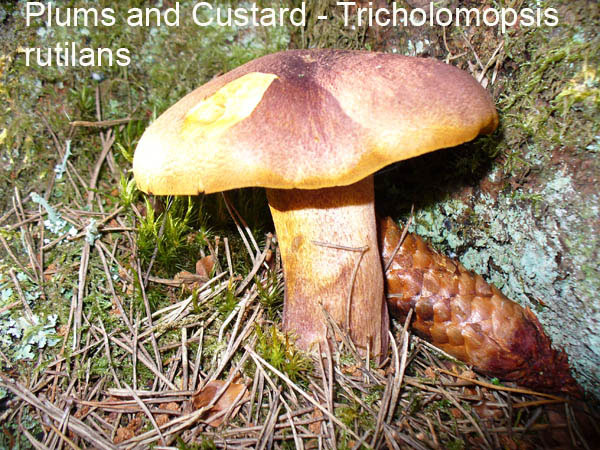
On 19th, I gathered elderberries and made a gallon of wine, and froze two boxes of them. Fished some out last week and made Elderberry Muffins. More Plums and Custard found on 26th.

Wild weather has seen off the rest of October – firstly howling gales and cascades of rain, then snow, followed by a big freeze. Time to stay by the stove and roast chestnuts!